Scroll down for a taste of Miltonic style
Image
Image
Introduction to Milton's Language
Milton's Multilingualism
Although one can safely conclude that Milton did write in the English tongue (to be more precise, the early modern English of the Renaissance), different languages resonate throughout this epic. Biographers postulate that Milton knew as many as ten languages, among them Latin, Greek, Italian, Dutch and even Hebrew. Given this range of linguistic knowledge, it is hardly surprising to find a high level of awareness with regard to the etymology (i.e. the linguistic origins) of the words he used. But before we consider how he manipulated the senses in which he used his words, we must make a foray into biblical realms in order to understand how Milton viewed language.
The Word
At the beginning of the Book of John, we find the famous formulation: 'In the beginning was the Word and the Word was with God, and the Word was God' (1:1). In Christian theology, this 'Word' is the creative power of God and is usually equated with the Son. In Paradise Lost, Milton makes this association explicit; Milton's God addresses and names the Son 'My word, my wisdom, and effectual might' (3.170) and later the 'omnific Word' (7.217—scroll down for Glossary). When God addresses the Son, God's words become the Word and take effect:
And thou my Word, begotten Son, by thee
This I perform, speak thou, and be it done…
So spake the almighty, and to what he spake
His Word, the filial Godhead, gave effect. (7.164-75)
Samuel Johnson, in his dictionary, uses the first two lines of this quotation to illustrate the definition of the word 'word' as 'The second person of the ever adorable Trinity'. It is the Word/Son that actually performs God's will. The second line of this quotation can become a wider formula for the dynamic of the relationship between the Son and God: 'This I perform, speak thou, and be it done'.
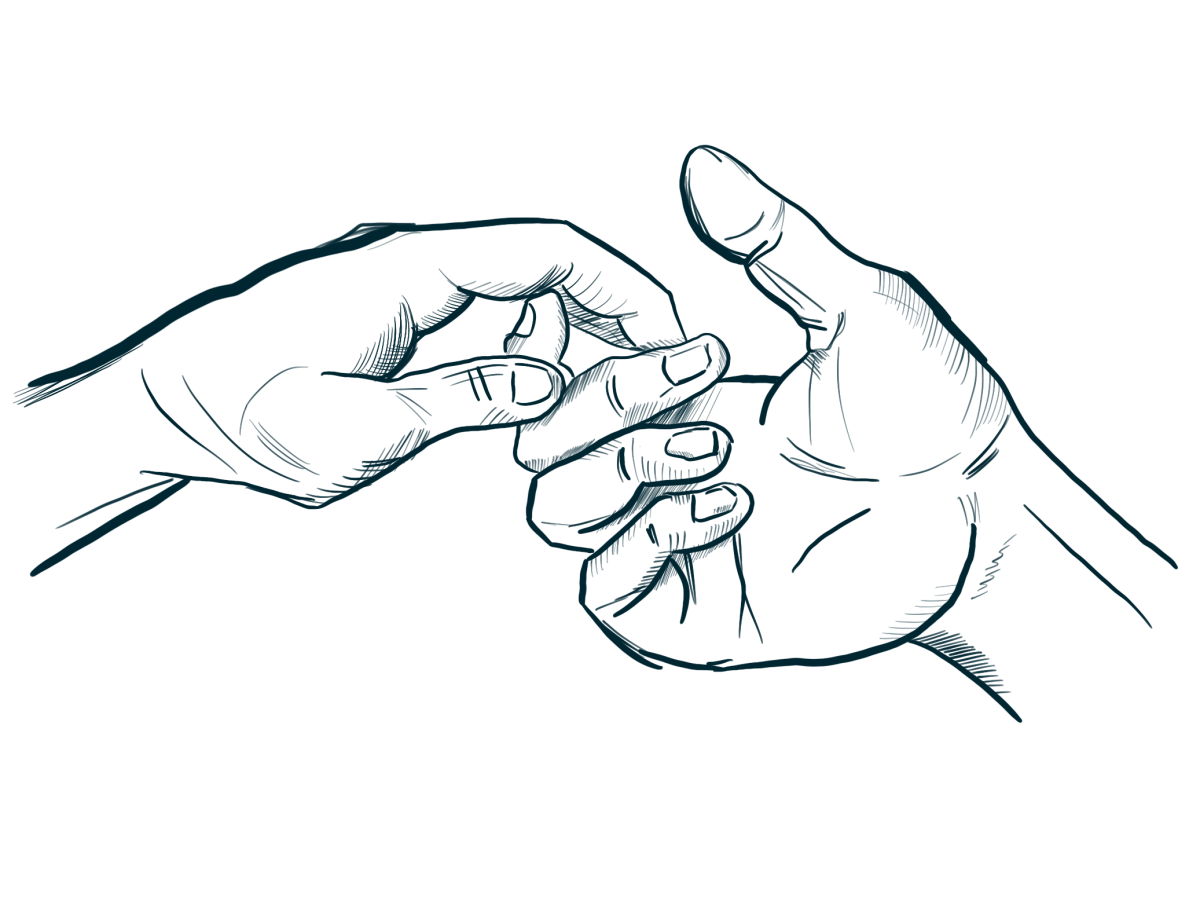
There is a theory of language called Speech Act Theory which identifies certain types of utterance (speech acts—see Glossary below for a definition) that perform actions rather than simply saying or describing something. The words God speaks at the Creation are the ultimate and original speech act; as narrated in Genesis and Paradise Lost, God only has to speak and the words come into effect:
And God said, 'Let there be light'; and there was light… (Genesis 1:3)
Let there be light, said God, and forthwith light
Ethereal, first of things, quintessence pure
Sprung from the deep… (7.243)
Milton inverts the arrangement of the identification of the voice and the spoken words themselves, thus absorbing God's voice entirely into the poetic lines. 'Sprung' is an inverted iamb, mirroring the initial inverted foot of 'Let there be…' to assert a metrical alignment that parallels the semantic and tangible fulfilment. In both the Bible and Paradise Lost, the coordinating conjunction 'and' asserts the success of this speech act, as God only has to say the words for their substance to be realised. Twice in Book 7, we encounter 'He named' (252, 274), as a synonym for 'he created'. God's naming of the world, then, is equivalent to its creation, as the very naming of things initiates their existence as realities.
Edenic Language
In Eden, Adam and Eve are able to speak a language in which there is a natural correspondence between the things and the words they use to name them. In the Tetrachordon (one of his divorce tracts), Milton points out 'Adam had the wisdom giv'n him to know all creatures, and to name them according to their properties' (CPW, 2.602). In Paradise Lost, we find the following lines which record Adam's first words:
…to speak I tried, and forthwith spake,
My tongue obeyed and readily could name
What e'er I saw. (8.271-3)
This naming is associated with understanding and is a God-given gift:
I named them [the animals], as they passed, and understood
Their nature, with such knowledge God endued
My sudden apprehension… (8.352-4)
God's naming actually creates a thing's substance, whereas Adam only mimics this. But, naming and understanding are equated for Adam because of the crystalline clarity of signification in Eden.
Glossary
Omnific
All-creating or all-making. Milton coined this word from two common Latin words.
Speech act
In the words of J.L. Austin (the founding philosopher of speech act theory), a speech act is a special case where 'the issuing of the utterance is the performing of an action' (How to Do Things with Words (Oxford, 1975), p. 8). He gives as examples the naming of a ship, or the marriage vows in a wedding ceremony.