31.05.26
In our latest blog post, English teacher and Milton scholar Dr Anthony Bromley thinks about Milton's changing response to the genre and concept of utopia across his career.

In our latest blog post, English teacher and Milton scholar Dr Anthony Bromley thinks about Milton's changing response to the genre and concept of utopia across his career.
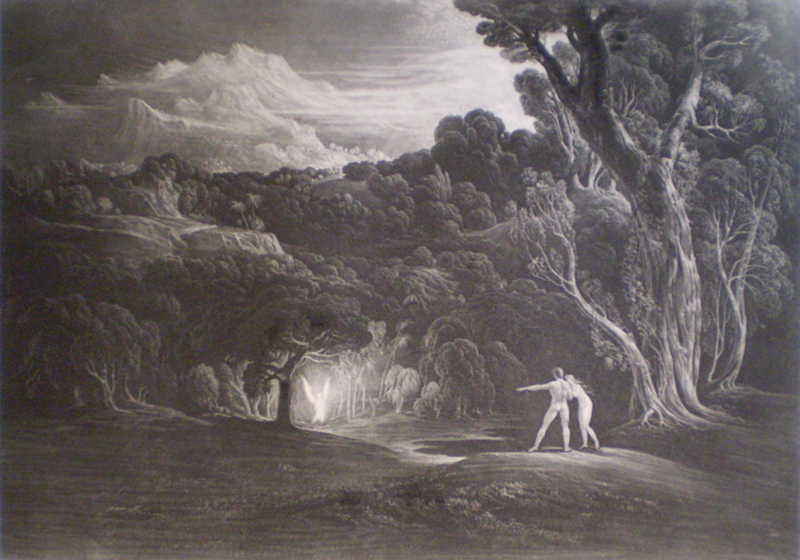
Modern readers of Milton may associate the word ‘utopia’ with the Disney film Zootopia (to use its original title), which depicts a society that prides itself on toleration between animals, while dystopian corruption and surveillance lurk beneath its surface. Readers of Paradise Lost may also view an initial reading of the epic poem as anything but a utopian experience. What both examples illustrate is a straightforward equivalence between utopia and the ideal. Such readers might also associate Paradise Lost with utopia through its titular focus on the ideal world of Eden, the perfect realm of Heaven, and their antithesis in Hell. The reader experiences Eden for the first time through Satan, unattainable to him as it is lost to them:
Beneath him with new wonder now he views,
To all delight of human sense exposed,
In narrow room, nature’s whole wealth, yea more,
A heaven on earth: for blissful Paradise
Of God the garden was, by him in the east
Of Eden planted… (4.205-10)
For Satan, this perfection induces jealousy and despair for what he has lost (4.13-113), only able to access Eden through stealth and guile. For a twenty-first-century reader, Eden is utopian insofar as it is perfect, and possibly due to its distance from the comparative dystopia, the ‘Dungeon horrible’ (1.61) of Hell.
Milton’s conception of the ideal, though, was influenced by the genre and concept of utopia, the roots of which originate classically in Plato, and for the early modern period in Thomas More’s Utopia (1516). ‘Utopia’, a word coined by More and meaning ‘no place’ etymologically, became an established genre with repeatable tenets, including a travel narrative, usually as a dialogue between a traveller and an interested acquaintance or friend; extensive detail of an ideal foreign society, and a discussion of how the ideal place is superior to contemporary society. Francis Bacon’s New Atlantis (1627) is notable for its depiction of Salomon’s House, an institution that coordinates scientific experimentation and intellectual exploration, which directed future utopias towards envisioning institutional knowledge propagation, particularly that of science. Milton’s seventh prolusion (a Latin oration delivered as part of one’s academic training), written while he was studying at Christ’s College, Cambridge, indicates that he read and admired Bacon. His reception of utopia, however, is more ambiguous.
Milton’s first published comment on utopia is one of effusive praise, in his anti-prelatical tract, An Apology against a Pamphlet (1642):
That grave and noble invention which the greatest and sublimest wits in sundry ages, Plato in Critias, and our two famous countrymen, the one in his Utopia, the other in his new Atlantis chose, I may not say as a field, but as a mighty Continent wherein to display the largeness of their spirits by teaching this our world better and exacter things, then were yet known, or us’d…
‘Continent’ is a metaphorical measure for the scale of educational potential. It also illustrates the excitement attached to his praise, deliberately poised against the humbler image of a ‘field’. Milton exalts utopias for their capacity to show the world ‘better and exacter things’, change that contemporary society could and should implement. By contrast, in Areopagitica, published just two years later, gone is Milton’s zeal as he criticises utopia for impractical idealisation:
To sequester out of the world into Atlantick and Eutopian polities, which never can be drawn into use, will not mend our condition; but to ordain wisely as in this world of evill, in the midd’st whereof God hath plac’t us unavoidably.
Milton expresses concern that utopian writings, specifically Utopia and New Atlantis, project perfect societies onto imagined worlds, which are inapplicable to 1640s England. He replaces the superlative praise of An Apology with not only censure, but counsel for the reader of Areopagitica to avoid such utopian imaginings. ‘Utopia’ or ‘utopian’ were widely used as insults in the mid-seventeenth century for writings that did not address contemporary concerns, particularly those relating to the raging civil war. Milton had received public rebuke from preachers for having published The Doctrine and Discipline of Divorce the previous year. By deliberately orienting Areopagitica away from this disparaged genre, Milton protected the tract from contemporary critics.
Milton would nevertheless experience castigation for being a utopian on the eve of the Restoration in 1660, when republican critics used the notion of utopia to pillory statesmen like Milton. William Collinne, responding to Milton’s The Ready and Easy Way to Establish a Free Commonwealth (1660) and referring to ‘J. M.’, questions
Whether his new frame of a Common-wealth without re-admitting of Kingship … ought not to be sent to terra incognita or, Sir Th. Moors Utopia, together with the Authors themselves to frame a free State there.
Collinne associates the proposal for a federated republic in The Ready and Easy Way with utopian fantasy, precisely the kind of criticism Milton had strived to avoid in Areopagitica. In the same period, Samuel Butler similarly jibes at Milton’s tract as ‘your Utopia (as you have ordered it)’. Milton was in the middle of writing Paradise Lost in 1660 and such criticism suggests that he would have been highly aware of how utopia was used as a means of political satire.
The context above indicates that Milton and contemporary readers of Paradise Lost would not have blindly associated utopia with ideal society or perfection. In choosing to depict the ideal worlds of Eden and Heaven through the form of an epic poem, Milton may have sought to separate Paradise Lost from the fictional features of utopia. What is interesting, however, is just how far the poem can be read generically as utopian.
By travelling to Eden and relaying to Adam about God, Heaven, and the universe, Raphael resembles a traveller from a traditional utopian narrative. His name even happens to mirror that of the traveller in More’s Utopia, Raphael Hythloday. Raphael’s narrative is less conventionally utopian, though: it begins with a warning about Satan and a history of the war in Heaven, before outlining the creation of the world and, upon Adam’s request, the structure of the universe. In Book 5, Adam asks how the food of Eden compares with that of Heaven and Raphael responds with an extensive overview of Milton’s monistic universe (his view that the whole universe was composed of a single, unified substance):
one Almighty is, from whom
All things proceed, and up to him return,
If not depraved from good, created all
Such to perfection, one first matter all (5.469-72).
Perfection, then, is proximity to God. The rest of the universe is connected to and formed from that ‘first matter’, and hence ‘Endued with various forms, various degrees / Of substance’ (473-74). The universal hierarchy that Raphael presents places Adam and Eve beneath angels, but it also offers mobility: ‘time may come when men / With Angels may participate’ (494-95).
We have the traveller, the instructive dialogue with an inquisitive interlocutor, and even the promise of realising the perfect world, but what of the description of the world itself – of Milton’s Heaven? Raphael presents an image of Heaven structured by militarised order, ‘Of Angels by imperial summons called, / Innumerable before the Almighty’s throne’, who ‘for distinction serve / Of hierarchies, of orders, and degrees’ (5.590-91). More structures his Utopia with similar rigorous order, a feature that recurs in later utopias such as James Harrington’s The Commonwealth of Oceana (1656).After Milton’s God has anointed the Son at his right hand, however, the description of the festivities that follow is tarnished by Raphael’s knowledge of what is to come: ‘with his words / All seemed well pleased; all seemed, but were not all’ (5.616-17). Milton’s poem is at its most utopian when it also recognises inevitable dystopia. Raphael describes the opulent, celebratory banquet in Heaven, with tables
piled
With angels’ food, and rubied nectar flows
In pearl, in diamond, and massy gold,
Fruit of delicious vines, the growth of heaven. (5.632-35)
But this perfection is immediately undermined by Satan, who Raphael describes with ‘Deep malice’ and envy wanting to ‘leave / Unworshipped, unobeyed the throne supreme’ (5.667, 670-72). Milton consistently contrasts the perfection of Heaven with its hellish inverse: Satan parodies the almighty angelic gathering beneath God’s throne with his own, the ‘palace of great Lucifer’ (760), using the hierarchical language of angels – ‘Thrones, Dominations, Princedoms, Virtues, Powers’ (772) – in precisely the same way that God had earlier in the book (601).
Zootopia may, therefore, share more with Paradise Lost than it may seem at first glance. The appearance of perfection in both Zootopia and Heaven is swiftly undermined by nefarious, corrupt behaviour. The blasphemous behaviour of Satan inverts the perfection of Heaven, and features throughout the poem as a constant reminder of its tragic climax and of the fallen state of mankind. The difference between Zootopia and Paradise Lost is that Milton uses aspects of traditional utopias in his initial description of Heaven through Raphael. Traditional utopias lack immoral or imperfect behaviour; the utopia is held as a standard to which the imperfect contemporary society is compared.
If traditional utopias convey the ideal society as a constant, maintained through laws and social structures, then Milton presents the ideal as a continuum, eventually achievable for the godly and easily lost by the sinful. Adam and Eve have the potential to reach perfection through obedience but choose to fall further from it. As such, Paradise Lost challenges the unrealistic idealism of utopia that Areopagitica criticised. Milton presents perfection realistically to the fallen reader: the ideal world has been lost, a loss caused by sin that continues to exist, but it can be attained again.
 Dr Anthony Bromley teaches English at Caterham School in Surrey. He has published papers on the impact of Milton's Of Education on the Hartlib Circle and on Milton's and Marchamont Nedham's responses to utopia in the late Protectorate period. Milton and utopia was the subject of his doctoral thesis and it continues to be an area of interest in his research.